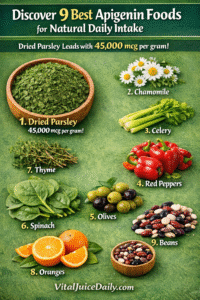
If you’re looking to boost your health naturally, understanding apigenin foods can make a significant difference in your daily nutrition. Apigenin is a powerful plant compound found in various herbs, vegetables, and fruits that offers numerous health benefits. The good news is that incorporating apigenin foods into your diet doesn’t require special supplements or complicated routines.
This comprehensive guide will walk you through the top 9 dietary sources of this beneficial compound. Whether you’re new to nutritional science or simply want to make healthier food choices, you’ll discover practical ways to increase your intake through everyday ingredients.
Understanding Apigenin and Why It Matters
Before diving into specific apigenin foods, it’s helpful to understand what makes this compound special. Apigenin belongs to a class of plant nutrients called flavonoids, which are known for their antioxidant properties. Research from the National Institutes of Health suggests that apigenin may support various aspects of health, from promoting better sleep to supporting cellular health.
The beauty of obtaining apigenin through food rather than supplements is that you also benefit from the other nutrients these whole foods provide. This synergistic effect often makes dietary sources more effective than isolated compounds.
1. Dried Parsley: The Apigenin Powerhouse
When it comes to apigenin foods, dried parsley stands out as the absolute champion. With an impressive 45,000 micrograms per gram, it contains more apigenin than any other commonly available food source. Just one tablespoon of dried parsley can provide a substantial amount of this beneficial compound.
You can easily incorporate dried parsley into your meals by sprinkling it over pasta dishes, mixing it into salad dressings, or adding it to soups and stews. Keep a jar of high-quality dried parsley in your spice rack and use it liberally in your cooking.
2. Chamomile Tea: A Soothing Source
Chamomile tea ranks among the most pleasant apigenin foods to consume regularly. A single cup of properly brewed chamomile tea can deliver significant amounts of apigenin, which is one reason this herbal tea has been valued for centuries for its calming properties.
For optimal apigenin extraction, steep your chamomile tea for at least 5-10 minutes in water that’s just below boiling. Use 1-2 teaspoons of dried chamomile flowers per cup, and consider drinking 2-3 cups throughout the day for maximum benefits.
3. Fresh Parsley: Everyday Versatility
While dried parsley contains higher concentrations, fresh parsley remains one of the most accessible apigenin foods for daily use. Fresh parsley works wonderfully as a garnish, but you’ll get more benefits by treating it as a main ingredient rather than just decoration.
Try making fresh parsley pesto, adding generous amounts to salads, or blending it into smoothies. A large handful of fresh parsley can easily be incorporated into your morning eggs or afternoon grain bowls.
4. Celery and Celery Seeds: Crunchy Nutrition
Celery deserves recognition as one of the most convenient apigenin foods available in any grocery store. Both the stalks and seeds contain notable amounts of this compound, making celery a versatile addition to your diet. Celery seeds, in particular, offer concentrated apigenin content.
Enjoy celery sticks as a snack with hummus, add chopped celery to soups and stir-fries, or juice it with other vegetables. Celery seeds can be ground and used as a seasoning for various dishes or added to homemade pickles.
5. Oregano: The Mediterranean Herb
Among culinary apigenin foods, oregano provides both flavor and nutritional benefits. This popular Mediterranean herb contains substantial amounts of apigenin, especially in its dried form. According to Harvard’s School of Public Health, herbs like oregano offer impressive concentrations of beneficial plant compounds.
Use oregano liberally in Italian dishes, Greek salads, roasted vegetables, and homemade pizza. Dried oregano works well in marinades and can be mixed with olive oil for a flavorful bread dip.
6. Citrus Fruits: Sweet Sources of Apigenin
Oranges, grapefruits, and other citrus fruits contribute to your apigenin intake while providing vitamin C and natural sweetness. While citrus fruits contain less apigenin than herbs, they’re among the more enjoyable apigenin foods for those who prefer fruit over vegetables.
The white pith and membranes of citrus fruits contain higher concentrations of apigenin than the juice alone. Try eating whole orange segments rather than just drinking juice to maximize your intake.
7. How Cooking Methods Affect Apigenin Levels
Understanding how to prepare apigenin foods properly ensures you’re getting maximum nutritional value. Heat can affect apigenin content, though the impact varies depending on the cooking method and duration.
Light steaming and quick sautéing generally preserve apigenin better than prolonged boiling. When possible, add fresh herbs at the end of cooking rather than at the beginning. For vegetables like celery, eating them raw or lightly cooked helps maintain their apigenin content.
8. Creating an Apigenin-Rich Meal Plan
Building meals around apigenin foods doesn’t mean sacrificing flavor or variety. Start your day with a smoothie containing fresh parsley and citrus fruits. For lunch, enjoy a generous salad topped with celery, fresh herbs, and a dried herb vinaigrette.
Dinner could feature roasted vegetables seasoned with oregano and fresh parsley, paired with a side of celery seed-crusted protein. End your evening with a calming cup of chamomile tea. This approach naturally incorporates multiple servings of apigenin foods throughout your day.
9. Estimated Daily Intake from Dietary Sources
While there’s no official recommended daily intake for apigenin, research suggests that consuming apigenin foods regularly can contribute to overall health. A diet rich in the sources mentioned above can provide anywhere from 3-20 milligrams of apigenin daily, depending on portion sizes and food choices.
By incorporating just 1-2 tablespoons of dried parsley, several celery stalks, and a cup or two of chamomile tea, you can easily reach meaningful intake levels. Remember that consistency matters more than hitting specific numbers—making these foods a regular part of your routine is what counts.
Common Mistakes to Avoid
Many people make the error of using only tiny amounts of herbs as garnishes rather than treating them as functional ingredients. When it comes to maximizing benefits from apigenin foods, quantity matters. Don’t be shy about using generous portions of parsley, oregano, and other herbs.
Another common mistake is discarding celery leaves, which actually contain more apigenin than the stalks. Save and use these nutrient-dense parts in stocks, salads, or as cooking greens. Similarly, avoiding the white pith in citrus fruits means missing out on valuable compounds.
Some individuals also brew chamomile tea too quickly, steeping for only a minute or two. This short brewing time fails to extract sufficient apigenin. Always allow adequate steeping time to maximize the nutritional value of your tea.
Tips and Advice for Maximizing Your Intake
Store dried herbs properly in airtight containers away from light and heat to preserve their apigenin content. Purchase fresh herbs in larger quantities and freeze what you won’t use immediately—frozen parsley works perfectly well in cooked dishes and smoothies.
Consider growing your own parsley, oregano, and chamomile if you have space. Fresh-picked herbs often contain higher levels of beneficial compounds than those that have been stored for extended periods. These plants are relatively easy to grow, even for beginners.
Pair apigenin foods with healthy fats like olive oil or avocado to enhance absorption. Since apigenin is a fat-soluble compound, consuming it alongside good fats helps your body utilize it more effectively. A simple parsley pesto with olive oil exemplifies this principle perfectly.
Create a weekly meal prep routine that includes chopping celery, washing fresh herbs, and preparing chamomile tea in larger batches. This preparation makes it easier to consistently include these nutritious options in your daily meals without added stress.
Conclusion
Incorporating apigenin foods into your daily routine doesn’t require dramatic dietary changes or expensive supplements. By focusing on readily available ingredients like dried and fresh parsley, chamomile tea, celery, oregano, and citrus fruits, you can naturally boost your intake of this beneficial plant compound.
Start with small changes—add an extra tablespoon of dried parsley to your dinner, swap your evening coffee for chamomile tea, or pack celery sticks for your afternoon snack. These simple adjustments add up over time and make eating for better health both achievable and enjoyable. With these 9 dietary sources at your fingertips, you’re well-equipped to make informed choices that support your wellness goals naturally.